


Channels and Cadence
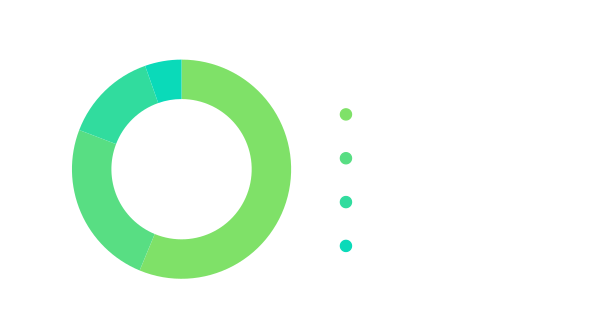
In home improvement, the default is still physical retail. Digital helps prevent a wasted trip. People want to see and handle products before they commit. That shows up in the numbers too: most respondents purchased in a physical store (61.3%).
Online purchasing is still meaningful (26.9%). Add online order + in-store pickup (8.1%), and omnichannel behavior lands at roughly a third of responses. This is certainty vs uncertainty. People go in-person for confidence, and they use digital to reduce the risk of wasted time and wasted trips.

Most home-improvement shopping is infrequent. Over half of respondents shop once every couple months or less (56.3%). This is a project-cycle pattern: people buy when something breaks, a new project starts, or a seasonal task appears. For most people, it’s not a weekly habit.
There’s also a meaningful minority that shops monthly (24.6%), plus a smaller but important segment that shops weekly or more (19.2% combined). That split suggests two different jobs. You need to be the best option at the moment of need for occasional shoppers, while treating frequent shoppers as a distinct group that benefits from speed, repetition, and loyalty value.
Drivers and Triggers
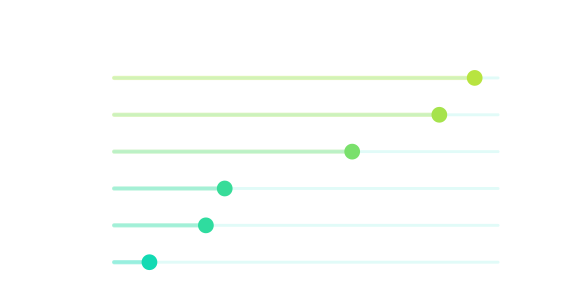
Home improvement shoppers are overwhelmingly value-driven. Price (93.9%) and quality (84.7%) lead by a wide margin, which signals that shoppers prioritize cost-consciousness and product performance above all else.
Price (93.9%) and quality (84.7%) lead by a wide margin. Availability is next (62.0%). Then it drops off to delivery (28.8%) and reputable brands (23.9%). Staff expertise is least cited (9.2%), suggesting shoppers either self-serve decisions or don’t see expertise as a meaningful differentiator. What wins is straightforward: competitive pricing, quality assurance, and in-stock reliability.
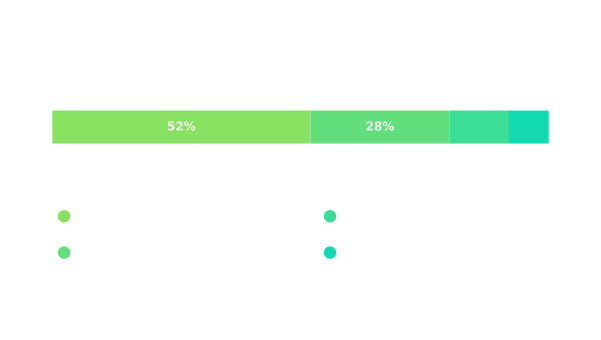
Most respondents described planned purchases (52%). That usually means proactive maintenance and improvement. Urgent repair is still substantial (28%), which shows how often this category gets driven by time pressure and necessity.
This split creates two different decision moments. Planned buyers have time to compare price and quality. Urgent buyers compress the funnel and prioritize speed and availability. Retailers that support both project planning flows and “fix it now” flows are best positioned to capture demand across the full range of customer situations.
Switching and Friction
Lower prices are doing most of the work here. Nearly half of respondents (49.5%) say that’s the main reason they’d switch stores. Inventory quality and selection are next (29.2%), which lines up with a simple reality: people switch when another place has what they need.
Member benefits (14.1%) and faster pickup (6.0%) matter for some shoppers, but they show up as secondary drivers. Return policy is barely mentioned (1.3%). If you want to win new customers, it comes down to credible price advantage and dependable assortment. Loyalty and convenience features add lift once the fundamentals are solid.

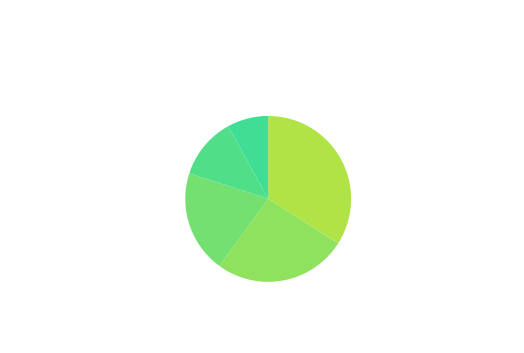
When shopping for home improvement items, the biggest frustration is product availability (34%). People mention stockouts, or not finding what they need. This hits extra hard because it wastes time and can derail a project, especially in urgent situations.
Next comes the in-store experience (26%), including navigation, pushy sales, and lack of employee knowledge. Then product information issues (20%), like difficulty comparing options or not knowing enough to choose confidently. Pricing concerns (12%) and other issues (8%) trail. The throughline is pretty consistent. Shoppers want a reliable run: find it fast, confirm it’s right, pay a fair price, leave. Frustration spikes when that flow breaks.
The Retail Bottleneck Is Certainty
Across the questions, the same thing comes up again and again. Shoppers aren’t looking for inspiration. They’re trying to avoid wasted money and wasted trips.
- In-store remains the default (61.3%), but omnichannel is meaningful (~35% online or pickup).
- Most shoppers are infrequent (56.3%), so winning the moment of need matters more than constant engagement.
- Price (93.9%) and quality (84.7%) dominate choice, while availability (62.0%) determines whether the purchase happens.
- Switching is primarily price-led (49.5%) and secondarily selection-led (29.2%).
- The top frustration is stockouts (34%), followed by store friction (26%) and information gaps (20%).
The implication is practical, not abstract. The retailers that win will be the ones that make the shopping trip feel low-risk and efficient. Digital doesn’t replace the store. It functions as a confidence layer. It helps confirm stock, reduce uncertainty, and accelerate pickup. The store still has to deliver the fundamentals quickly and consistently.OUR CONCLUSION
Winning Home Improvement Means Certainty
Home improvement shoppers aren’t browsing for fun. They’re trying to get a job done. Retailers win when “right item, right price, right now” feels like a sure thing.
This study shows a stable hierarchy of needs. Shoppers care overwhelmingly about price and quality, and they get frustrated when inventory and information fail them. Even with a strong in-store default, digital plays a growing role as a risk reducer. It helps shoppers confirm availability, compare options, and avoid wasted trips.
The path forward is straightforward. Compete on price where it matters most. Invest in inventory accuracy and assortment. Reduce in-store friction with clearer navigation and better product decision support. Then use omnichannel, especially pickup, to convert uncertainty into certainty. So the customer’s default becomes simple: go there, get it, done.