
PERSPECTIVES
Eric Swalwell Allegations: Timeline, Voter Reaction, and Candidate Reallocation

On this page
Summary
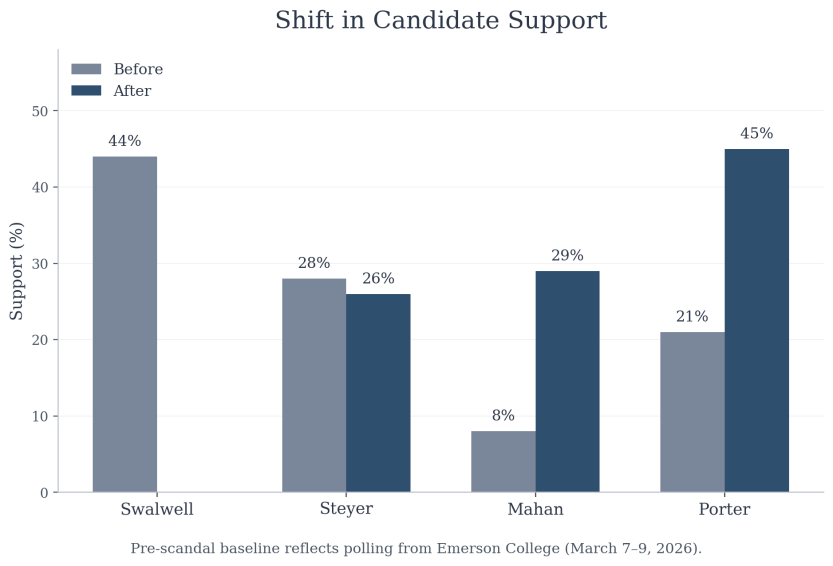
echo Intelligence is tracking the California gubernatorial field in real time, measuring candidate support and the reasoning voters give for supporting, rejecting, or reconsidering candidates. Prior to the scandal, Eric Swalwell led the field at 44% of decided democratic voters, followed by Tom Steyer at 28%.
That dynamic shifted rapidly after sexual assault allegations against Swalwell became public on April 10, 2026. Swalwell denied the allegations, but by April 12 he had suspended his campaign. echo tracking captured both the speed of the collapse and where support moved next: voters overwhelmingly said he should end his campaign. Katie Porter emerged as the leading beneficiary among respondents reallocating support.
Timeline of Events and Opinion Shift
From mid-March through early April, echo tracked a stable lead for Swalwell in a crowded field. On April 9, echo detected intensifying rumor activity and began testing hypothetical voter reactions to a candidate facing sexual assault allegations. When public reporting broke on April 10, echo shifted immediately from hypothetical testing to live measurement of voter reaction, candidate substitution, and campaign viability.
Over the next forty-eight hours, the scandal moved from allegation to campaign-ending event. Reuters reported on April 11 that the Manhattan District Attorney's office was investigating the claims, and by April 12 Reuters and AP reported that Swalwell had suspended his campaign while continuing to deny the allegations.
Methodology
echo Intelligence agentically tracks current events and asks people for open-ended reactions to salient issues. In California, we focused our questioning over the week on the gubernatorial race and, most recently, the allegations involving Swalwell. We use AI to generate questions within minutes of news breaking online, allowing us to measure emerging voter sentiment across the state and analyze both quantitative and qualitative responses at scale. All questions were asked to users of echo Chat, whose audiences reflect a broad cross-section of demographic and socioeconomic backgrounds in the United States and totaled 1,729 respondents.
Voter Reaction and Candidate Reallocation
Before the Allegations
Among decided democratic California voters, Eric Swalwell was the frontrunner for governor, with support among California respondents distributed as follows:
- 44% for Swalwell
- 28% for Steyer
- 21% for Porter
- 8% for Mahan
Swalwell had previously been associated with reports of a brief relationship involving a Chinese spy. When presented with that information, 37% of respondents said they believed it, 12% said they did not, and 51% said they needed more information before making a judgment. In total, 29% of respondents said the allegation made them view Swalwell more negatively.
To benchmark pre-scandal positioning, we reference publicly available gubernatorial polling from Emerson College (March 7–9, 2026), normalized across the Democratic candidates analyzed in this report. Post-scandal findings reflect echo Intelligence polling conducted in direct response to the allegations.
After the Allegations
- 91.7% of those polled said the allegations were likely to change their vote, with 50% of that group saying they did not need to wait for verification before making that decision.
- 74% of respondents said they felt enraged upon hearing the accusations.
- Before Swalwell officially suspended his campaign, only 24% of respondents believed he still had a viable path to winning the governor's race after the allegations surfaced.
- In a three-way choice among Katie Porter, Matt Mahan, and Tom Steyer, Katie Porter received the largest share at 45%, followed by Matt Mahan at 29% and Tom Steyer at 26%.
- Respondents said the most important priorities for the next California governor should be cost of living (45%), the housing crisis (29%), and immigration (16%).
Qualitative Interpretation
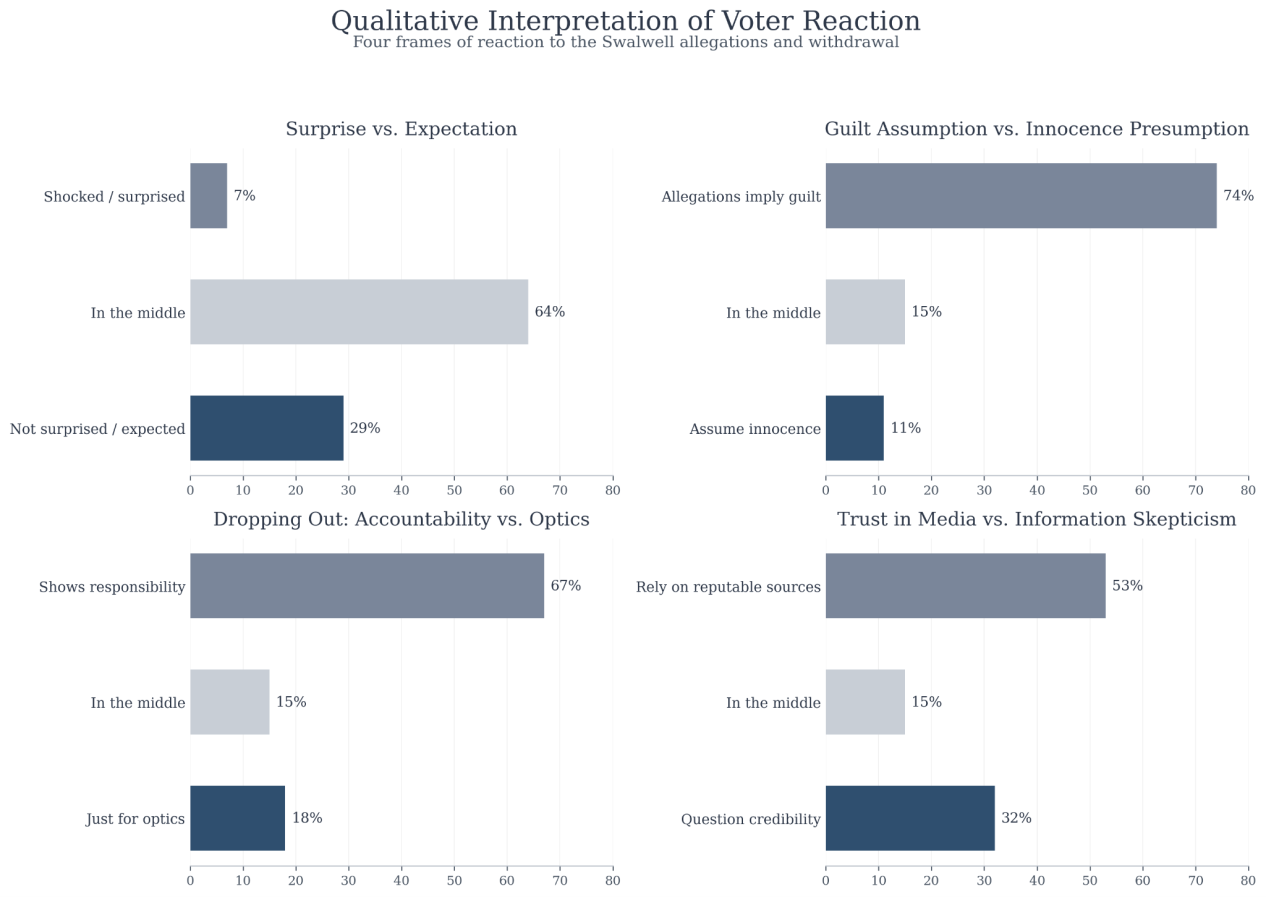
To understand not just how voters reacted, but how they interpreted the scandal itself, we began by asking for their immediate response to the allegations and Swalwell's withdrawal from the race.
"On Friday, April 10, Eric Swalwell, a candidate for California governor, was accused of multiple sexual assault allegations. On Sunday, April 12, he dropped out. What's your initial reaction?"
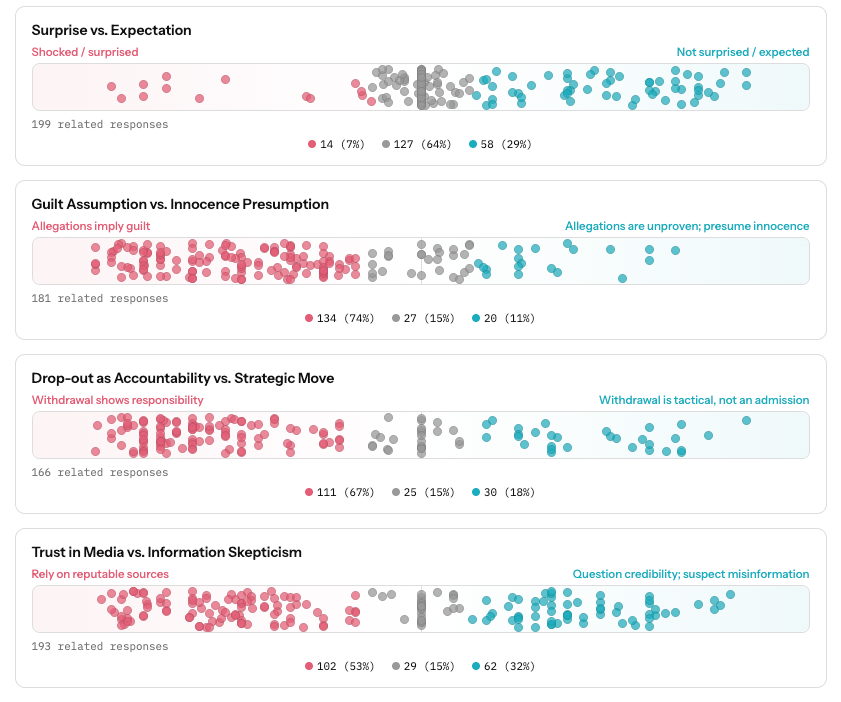
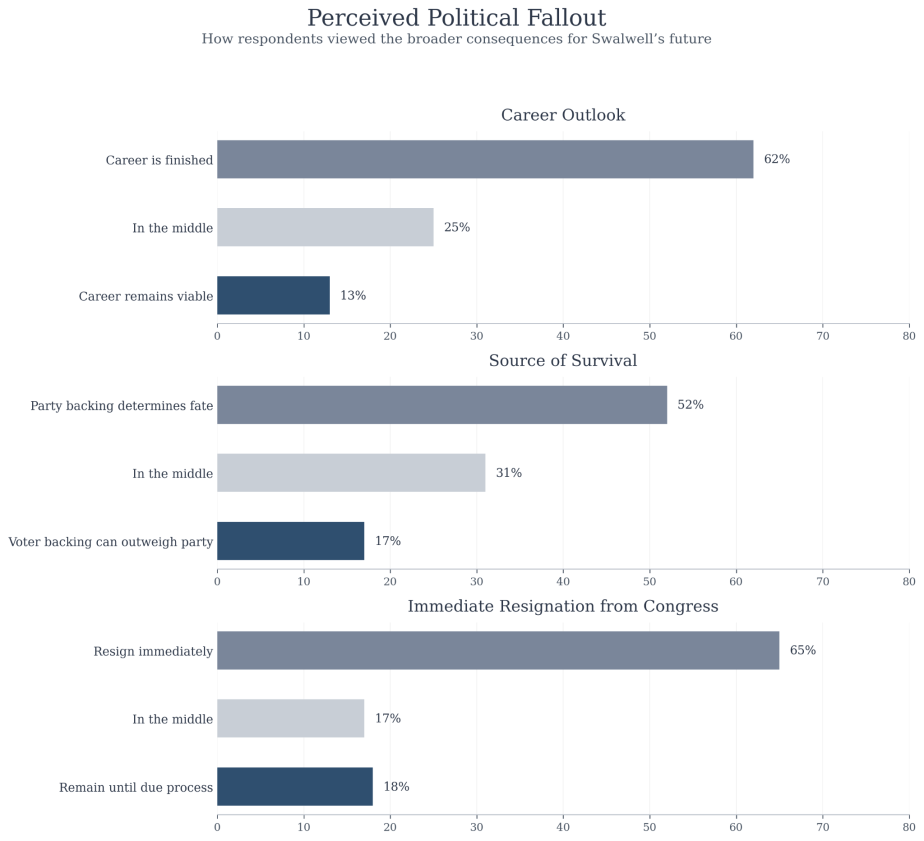
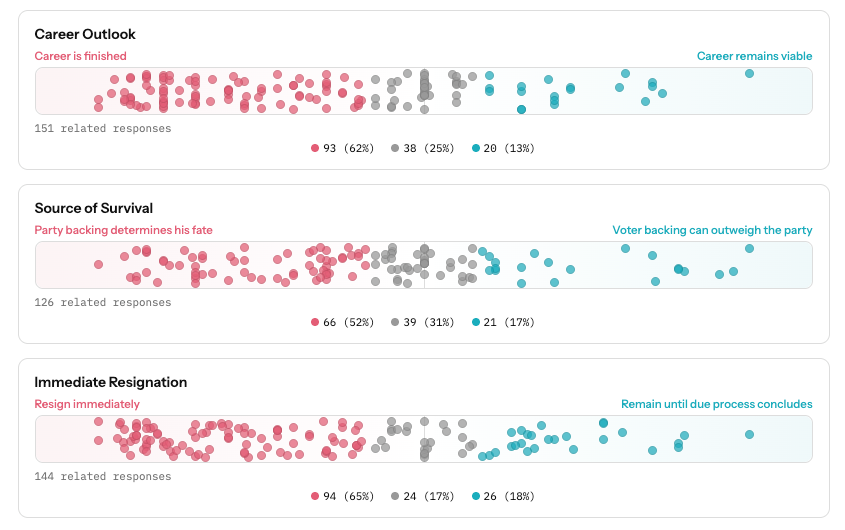
As responses made clear that many voters saw the allegations as threatening more than just Swalwell's gubernatorial bid, we next examined whether they believed the fallout would end his broader political career.
"California Democrats are abandoning Swalwell and some are calling for his expulsion from Congress. Do you think Swalwell's political career is over?"
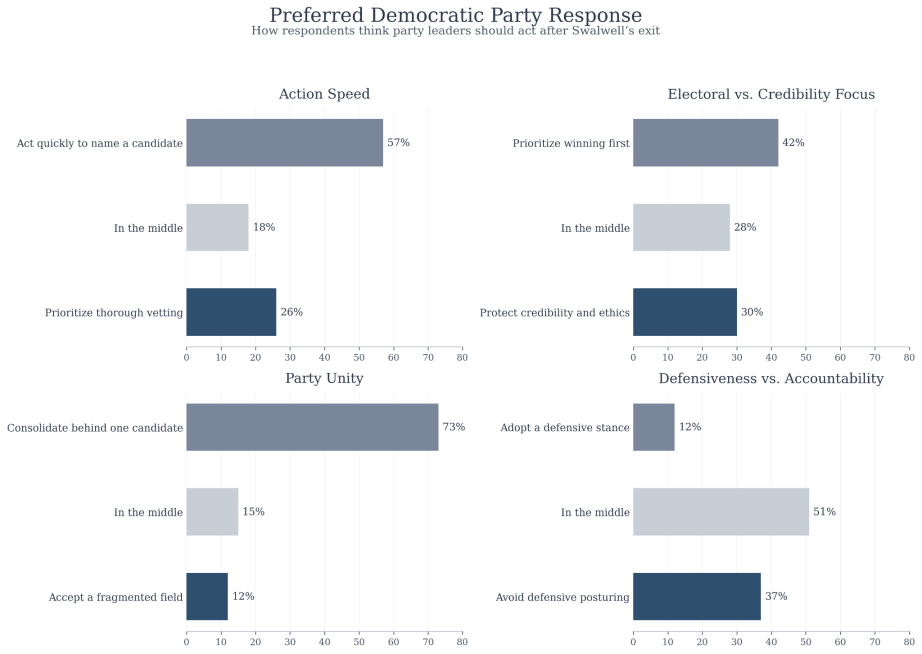
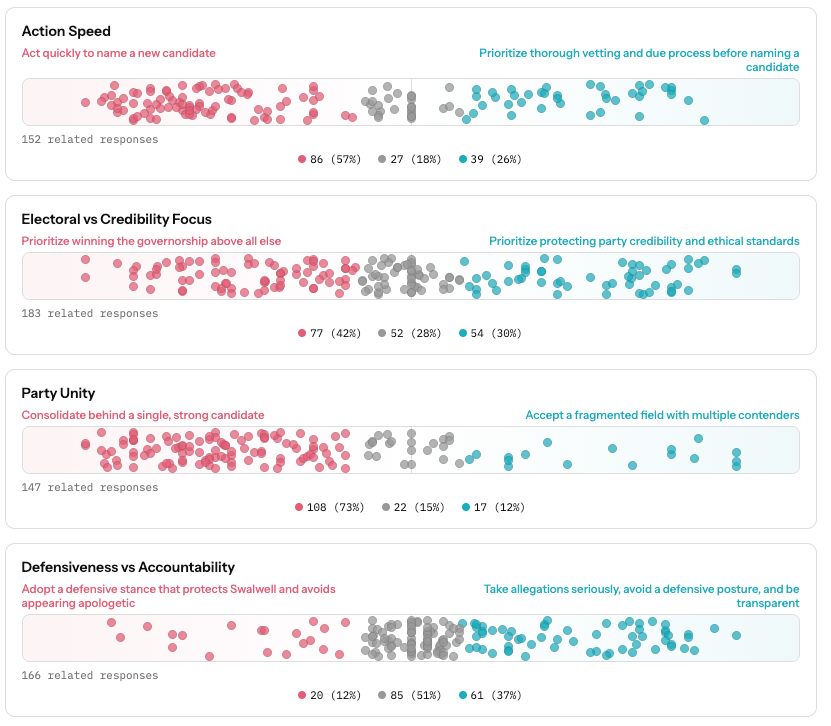
We then widened the lens from Swalwell himself to the Democratic Party, asking how voters believed party leaders should respond in the aftermath of his exit.
"Swalwell had emerged as the leading Democratic contender in the California governor race, but now he's gone. How do you think the Democratic party should act now?"
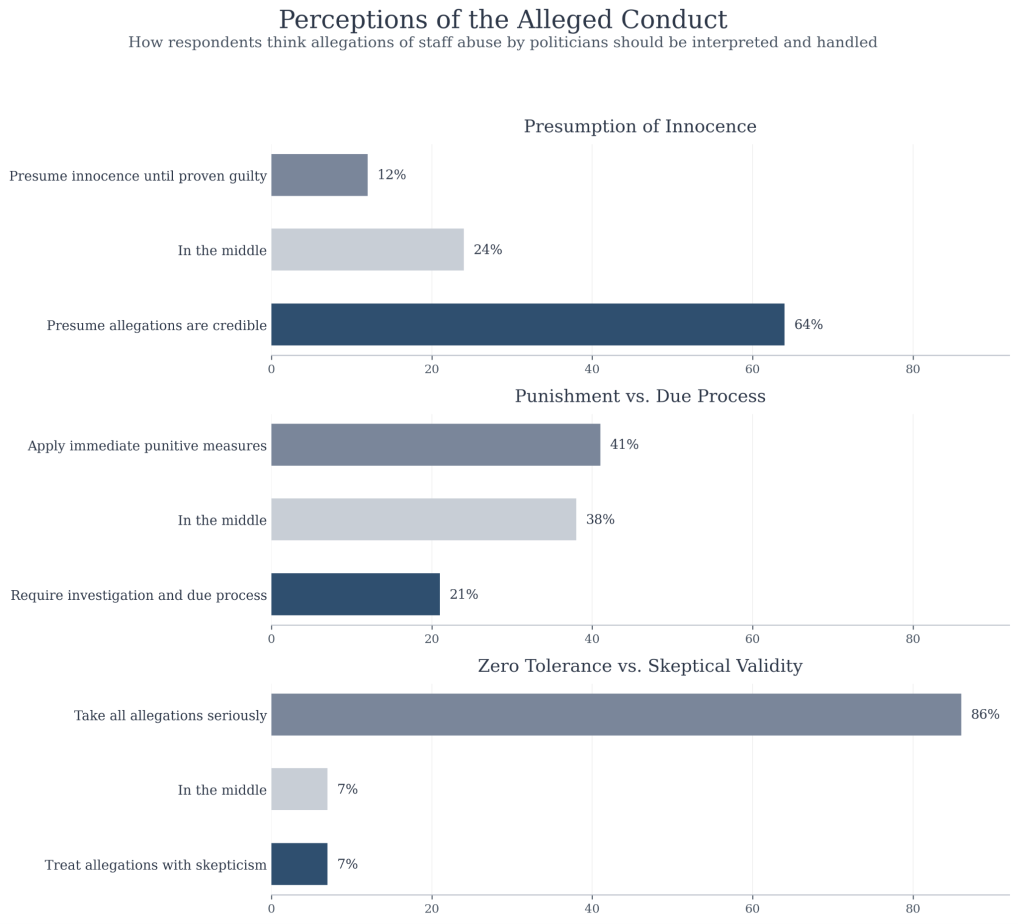
Finally, we moved from electoral consequences to the underlying conduct at issue as the Manhattan District Attorney's office began investigating, asking respondents how they think allegations of staff abuse by politicians should be understood and handled.
"Do you have any additional thoughts on politicians abusing their staffers?"
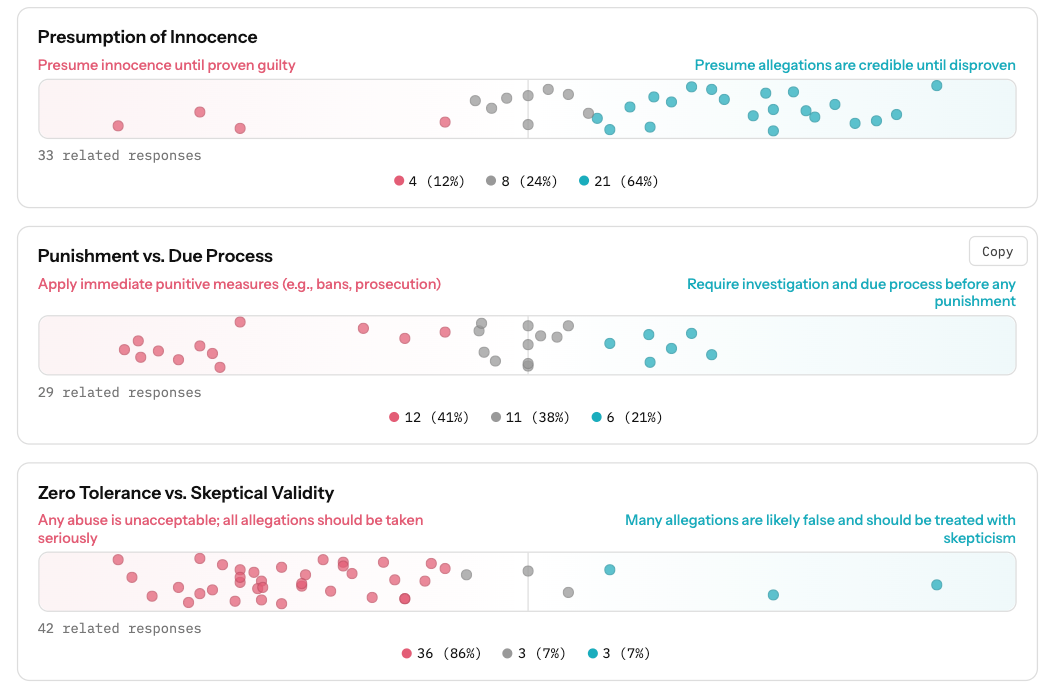
Implications for the Race
The scandal appears to have produced not a gradual decline, but a rapid collapse in Swalwell's political viability. echo's tracking suggests voters did not treat the allegations as a manageable controversy; most respondents said the allegations would change their vote, only a small minority believed he still had a path to winning after the accusations surfaced, and qualitative responses showed that many viewed the allegations as immediately disqualifying. In practical terms, this transformed the race almost overnight from a frontrunner-led contest into an open battle for consolidation.
That consolidation did not occur evenly across the remaining field. Katie Porter emerged as the clearest immediate beneficiary, suggesting that voters were not simply scattering after Swalwell's exit, but coalescing around the candidate they saw as the strongest credible alternative. At the same time, respondents signaled that they want the Democratic Party to respond with speed, unity, and accountability, while returning focus to the issues they still care about most: cost of living, housing, and immigration. The candidate best positioned going forward, then, is unlikely to be the one who merely inherits Swalwell's voters, but the one who can both embody a clean break from the scandal and re-center the race on everyday California concerns.
See echo in five minutes.
Bring a question. Get a real answer from real people, on the AI they already use.