

Findings: Brand Landscape and Channels
The consideration set is top-heavy. Red Bull (51.4%) and Monster (50.0%) dominate near-term consideration, and they form a clear default set for a lot of consumers. Celsius (28.5%) is a meaningful third. After that, the rest of the brands make up a long tail that still captures real attention.
This suggests incumbents hold mindshare, and challengers still have room to win moments, especially when they line up with the switching levers shown elsewhere: flavor novelty, “healthier,” or price.

Purchase locations are overwhelmingly physical. Grocery (63.4%) leads, and gas station (58.6%) and convenience store (50.3%) are close behind. That points to a mix of planned restocks and high-intent, “grab-and-go” buys.
Online (12.4%) and bulk supplier (11.0%) show up, but they’re secondary in this sample. Most volume opportunities still depend on winning shelf presence, cold-box visibility, and in-the-moment promotion where people already shop.

Why People Consider a Brand
Energy drink choice is primarily sensory and functional. Taste is doing most of the work here (80.0%). Then it drops to price (58.6%) and caffeine content (53.1%). Those are the practical checks people run before they buy. Ingredients (46.9%) matter for a lot of people, and sugar/sweetener (31.7%) points to a meaningful “health-aware” segment. It’s part of the decision, but it’s not the headline driver.
Brand image is low (16.6%). People are choosing energy drinks for a predictable experience: something that tastes good and delivers the effect at an acceptable price.
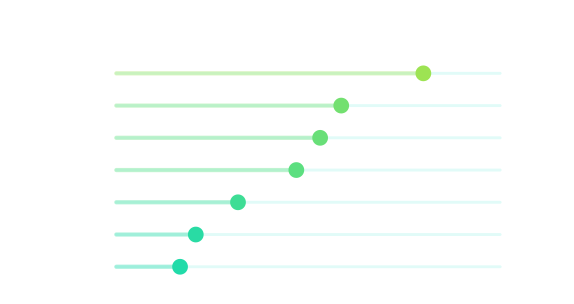
The top switching trigger is a price drop (34.5%). New flavor (27.6%) and healthier (26.2%) are close behind. Together, those three explain most switching behavior. People move when the payoff feels immediate and tangible.
Friend recommendation (8.3%) and bundle deal (3.4%) are minor here. Most switching comes from the product and the incentive: the right price, a compelling new taste, or a “better for me” formulation.

How Many Bought at Once
Most purchases skew toward immediate consumption. One-at-a-time (37.2%) and two-or-three (35.2%) make up the majority, which suggests a mix of “grab one now” and modest stocking behavior.
A smaller segment buys four or more at once (13.8%). That lines up with heavier users or planned restocks. And 13.8% report not buying energy drinks at all. This split reinforces the need for both single-serve visibility (cold boxes, checkout adjacency) and multi-pack offers for routine buyers.
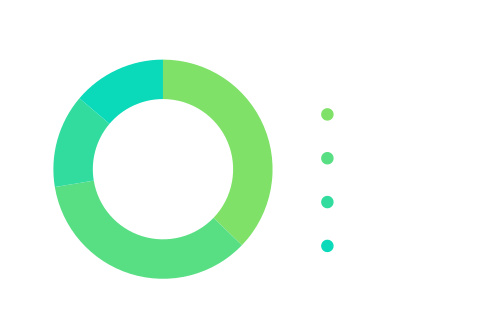
The responses are pretty consistent. Most consumers describe energy drinks in functional terms: energy, focus, alertness. And it’s anchored around home routines (31.2%) and work demands (29.0%). Morning usage shows up often (19.4%), reinforcing the “wake up / get through the day” framing.
Driving/on-the-go is a real cluster (14.0%), and pre-workout/gym is smaller but distinct (7.5%). There’s also a small “avoidance” theme tied to health concern/avoiding (4.3%). That supports “healthier” positioning as a way to convert some people on the fence, without turning it into the main message for the whole market.

Recent consumption mirrors consideration
Recent brand mentions reinforce the broader market shape. Red Bull and Monster show up the most. Then it drops off to a set of challengers and niche brands. Alani Nu and Celsius stand out as notable alternatives, pointing to a segment that’s exploring “different” positioning relative to classic incumbents.
Because responses can include multiple brands, treat this panel as directional. It’s still useful for seeing what’s top-of-mind in the most recent purchase context.

Win on Taste, Then Prove Value
This market is built on functional routines. People drink energy drinks to feel focused and alert. They choose what tastes good at the right price.
- Taste is the #1 driver (80.0%), with price (58.6%) and caffeine (53.1%) as the primary filters.
- Switching is product-led: price drops (34.5%), new flavors (27.6%), and “healthier” options (26.2%) do most of the work.
- The category is offline: grocery (63.4%), gas (58.6%), and convenience (50.3%) dominate.
- Consumption is routine-based: energy/focus language leads (43.0%), anchored in home (31.2%) and work (29.0%), with morning and driving as key clusters.
- Brand leaders still define the set: Red Bull and Monster lead both consideration and recent purchase mentions, with challengers competing for switching moments.
The implication is clear. Growth comes from product innovation, especially flavors and “healthier” variants, tied to the moments people actually use energy drinks for. It also comes from winning the retail environments where those decisions happen in real time.
Energy Drinks Are Routine-Driven
Energy drink consumption is largely practical: people are buying energy and focus, delivered in a taste experience they like. The winners will be the brands that show up in the right channels and own the moments that drive repeat behavior.
This study shows a stable hierarchy of choice. Taste leads decisively, with price and caffeine close behind. Ingredients and sugar shape a meaningful health-aware segment. Switching follows the same logic. Consumers move when the incentive is concrete: cheaper, a new flavor worth trying, or a healthier option that feels like a trade-up.
The playbook is straightforward. Lead with taste and functional benefits, use pricing and promotions to trigger trial, and keep innovation focused on flavors and health-adjacent formulations that match real routines (morning, work, driving, home). Then execute where the category lives: grocery for planned restocks, and gas/convenience for high-intent impulse moments.