
INDUSTRY INSIGHT
Polling Broke. Public Opinion Didn't.
Response rates cratered and the industry's answer is to remove people entirely. We tracked a frontrunner's collapse in real time instead.
On this page
When sexual assault allegations against Eric Swalwell became public on April 10, every campaign in California had the same question: where do his voters go. Echo had the answer within days, from 1,729 real respondents, measured live while the collapse was still happening.
Traditional polling could not have caught it. Field dates are scheduled weeks out, response rates have cratered, and by the time a conventional wave returned, the race it measured no longer existed. The industry's fashionable answer to that problem is to remove respondents entirely and simulate them. Ours is to listen faster.
Forty-Eight Hours, Measured Live
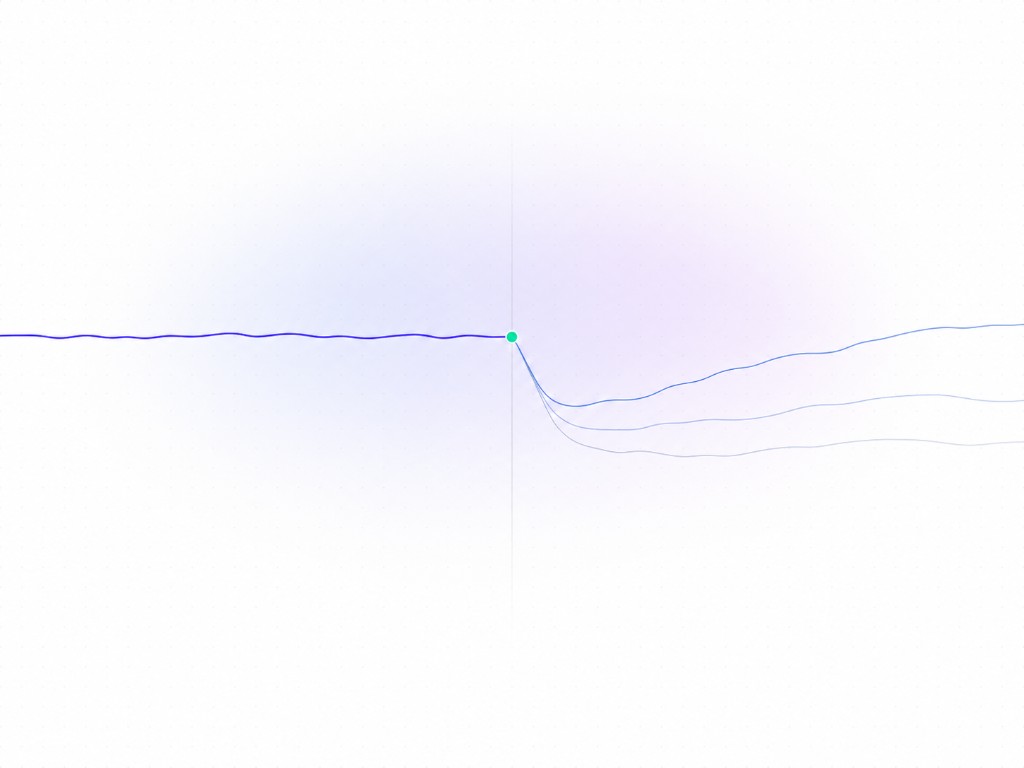
From mid-March through early April, Echo tracked a stable race: Swalwell led decided Democratic voters at 44%, ahead of Steyer at 28%, Porter at 21%, and Mahan at 8%. On April 9, the system detected intensifying rumor activity and began testing hypothetical reactions to a candidate facing assault allegations. When reporting broke on April 10, tracking shifted immediately to live measurement. By April 12, Swalwell had suspended his campaign.
The scandal moved from allegation to campaign-ending event in 48 hours, and the tracking has timestamps for every stage of it.
The Collapse, Quantified
| Measured after the allegations broke | Share |
|---|---|
| Said the allegations would likely change their vote | 91.7% |
| Of those, didn't need to wait for verification | 50% |
| Felt enraged on hearing the accusations | 74% |
| Still believed Swalwell had a viable path | 24% |
This was not a gradual decline for a poll to catch on its next scheduled wave. Voters treated the allegations as immediately disqualifying, and the qualitative responses said so in their own words before the campaign conceded it.
The collapse happened between everyone else's field dates.
Where the Voters Went
The strategically valuable number was never the topline. It was the reallocation. In a three-way choice among the remaining contenders, Katie Porter took 45%, Matt Mahan 29%, and Tom Steyer 26%. Voters didn't scatter; they consolidated around the candidate they saw as the strongest credible alternative.
Where Swalwell's support went
And they said what they want the race to be about next: cost of living (45%), the housing crisis (29%), and immigration (16%). The winning campaign isn't the one that inherits Swalwell's voters. It's the one that embodies a clean break and re-centers those issues. That's an actionable brief, not a horse-race number.
The full timeline, methodology, and qualitative analysis are in the complete tracking report.
The Industry's Wrong Answer
Silicon sampling proposes to fix polling's response-rate crisis by deleting the respondents. If the problem is that it's hard to hear from real people, removing them is not a fix; it's surrender. As we wrote in Public Opinion Requires the Public, a generated answer is still a generated answer. Real-time measurement of real people caught this collapse. A simulation would have confidently reported whatever its training data implied about a race that had just stopped existing.
What This Means
- Track continuously, not in waves. Events that decide races happen between field dates.
- Buy the reallocation map and the issue agenda, not the topline. That's where the strategy is.
- If no real people were asked, don't call it public opinion.
The public didn't stop having opinions. Polling stopped hearing them in time.
Echo Intelligence tracking, 1,729 respondents, California, April 2026.
See echo in five minutes.
Bring a question. Get a real answer from real people, on the AI they already use.